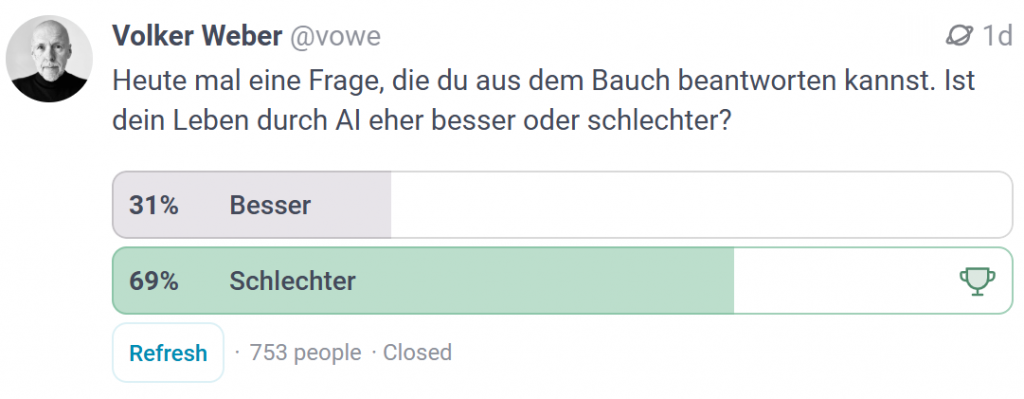
Manchmal sind einfache Fragen nur durch einen Aufsatz zu beantworten. Und deshalb bekam ich auch viel Post von Reply-Guys. Die waren gar nicht notwendig, weil ich schon sehr viel auf dem Thema herumgedacht habe.
Ich hätte übrigens auch für “schlechter” gestimmt.
Kritisches Denken ist keine Generalkompetenz, die man einmal lernt und dann auf beliebige Inhalte anwenden kann. Es ist gebunden an Wissen über den konkreten Gegenstand. Ohne dieses Wissen greifen die besten Checklisten ins Leere. Kritisches Denken ohne Fachwissen ist kein Denken. Es ist Raten mit Methode.
Das ist die bisher beste Auseinandersetzung mit der Anwendung von KI als Denkhilfe, die ich bisher gesehen habe. Die Autorin ist Professorin und Leiterin eines Masterstudiengangs E-Learning und Wissensmanagement. Und sie wendet ihr Wissen auf sich selbst an:
Ich nenne dieses Phänomen die KI-Fachkompetenzschwelle. Eine Grenze des Vorwissens, unterhalb derer KI-Nutzung nicht nur wirkungslos wird, sondern kontraproduktiv. Unterhalb dieser Schwelle kann ich KI-Output nicht bewerten, keine guten Fragen stellen, keine sinnvollen Ergebnisse erzielen. Und ich merke es nicht. Denn der Output sieht überzeugend aus. …
Die Schwelle, die schon zu niedrig war, sinkt weiter. Wer KI nutzt, ohne genug zu wissen, merkt nicht, dass er zu wenig weiß, und baut dabei weniger Wissen auf als ohne KI. Das ist kein Leerlauf. Das ist ein Teufelskreis.
Absolut lesenswert. Dieser Beitrag beschreibt wunderbar die beiden Seiten der KI. Wo sie hilft und wo sie zerstört.
Ich habe das an anderer Stelle einmal viel weniger intelligent zusammengefasst:
While I don’t think AI, specifically the generative kind, is a one-to-one with crypto, it has one important similarity: It only succeeds if they can figure out a way to force the entire world to use it. I think there’s a word for that!
Now you know why Microsoft is pushing Copilot down your throat. A very interesting read.
It is not a revolution in computing, but a revolution in accepting lower standards. The only way to consider most of our gadgets “smart” is by dumbing ourselves down.
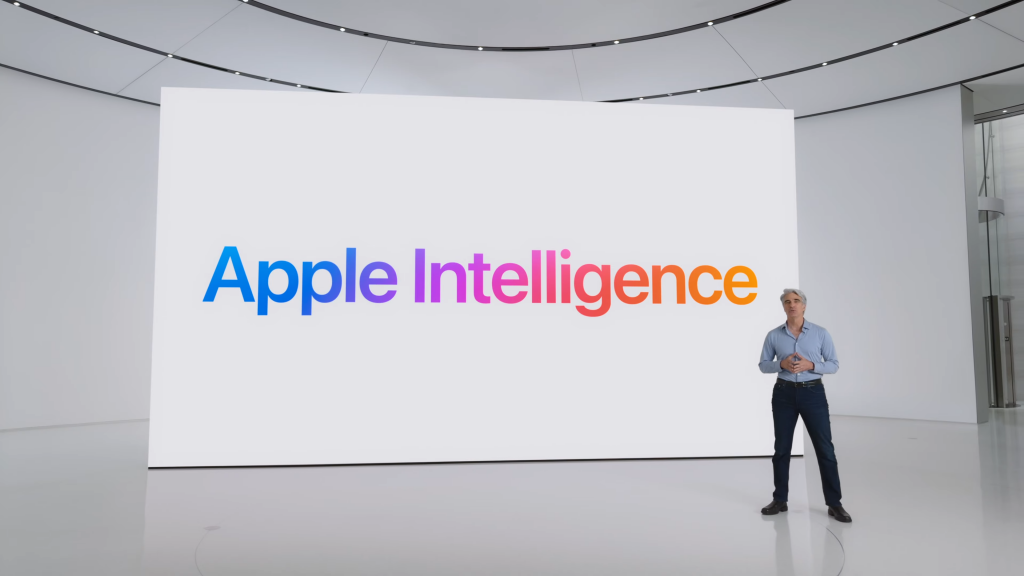
Vor zwei Jahren hat Apple auf der WWDC einen mutigen Entwurf für eine eigene künstliche Intelligenz angekündigt und einige Monate später eine neue Generation von iPhones für genau diese “Apple Intelligence”. Das war ein hohles Versprechen, das nie eingelöst wurde.
Nun soll es Google Intelligence richten. Die kann man heute bereits mit Google Gemini nutzen.
San Francisco ist voll mit dieser Werbung. Ich kann die Einwände “aber die Arbeitsplätze” nicht mehr hören. Offshoring, nearshoring, die Autoindustrie will schon gar keine Angebote mehr für eine Produktion im Inland sehen.
Es geht nur und ausschließlich um Kosten. Wenn die KI deinen Job machen kann, hast du keinen mehr. Die gute Nachricht ist: Sie kann es nicht.
“All of us were more confident about large language models a year ago,” [Salesforce Executive] Parulekar stated, revealing the company’s strategic shift away from generative AI toward more predictable “deterministic” automation in its flagship product, Agentforce.
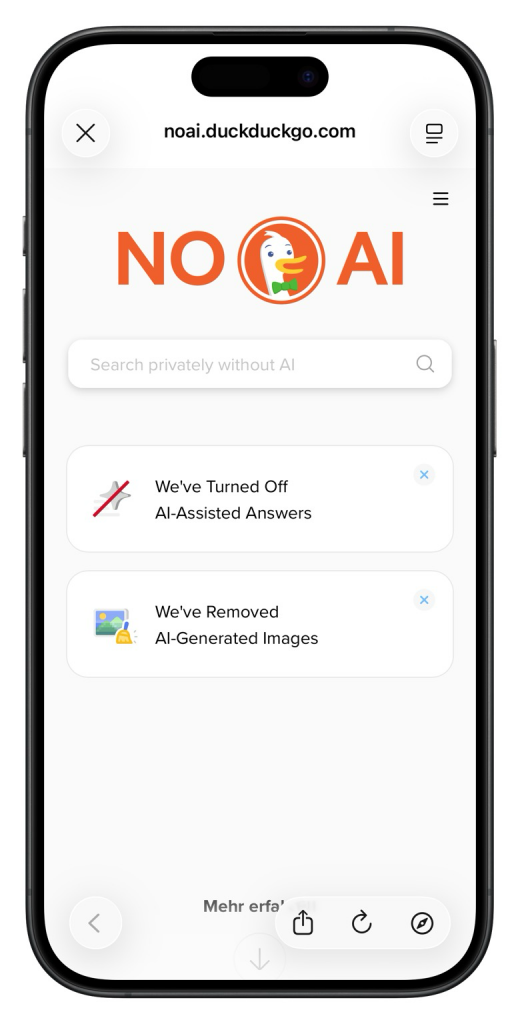
Ich finde seit Jahren mit DuckDuckGo anstelle von Google. Wenn man das Hamburger-Menü öffnet, findet man dort auch ein paar wertvolle Einstellungen, mit denen man AI Slop ausblenden kann: Duck.ai AUS, Search Assist NEVER und AI-generierte Bilder ausblenden.
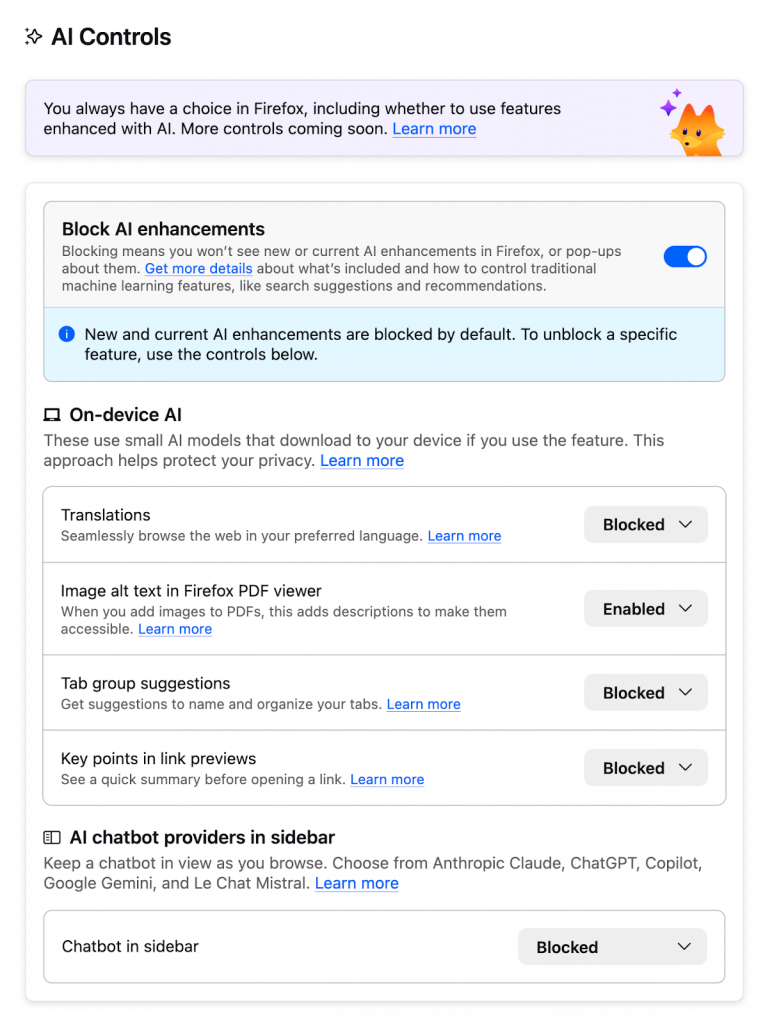
AI zu blocken wird bald eine ähnlich notwendige Technik wie Ad Blocker.
Deloitte just delivered the most perfectly timed contradiction in enterprise AI. On Tuesday, the consulting behemoth announced it’s rolling out Anthropic’s Claude across its entire 500,000-person workforce. That same day, news broke that Australia’s government had forced the firm to issue refunds after an AI-generated report contained completely fabricated citations.
An essential part of being able to say ‘I told you so’ is in fact having told you so. Here goes.
In April 2023, I wrote an article titled AI: Guaranteed to disrupt our economies. In this piece I also announced I was going to make a fool of myself by making some AI predictions. I have singularly failed to do so. In retrospect this was all spot on, except for perhaps missing the sheer magnitude of the madness that was about to ensue.
We’ve since had 30 further months to think about AI and to observe what it can and can’t do. Meanwhile, wise people (and Sam Altman) are starting to talk about AI possibly being a bubble that is about to burst (here, here and here).
When this happens, lots of people will be ready with reviews of how AI apparently sucks, or why we suck. I’d like to get my word in first, in this AI-collapse pre-mortem.